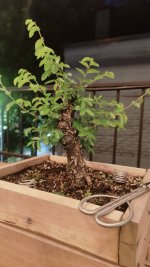
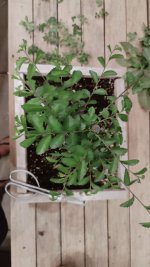
zita
Mame
waiting for the pic

Not sure what the second way means. In general, try to avoid having 2 branches (plus the main branch =3) at any point. That invariably leads to swelling where 2 side branches grow from the branch or trunk.and I understand there are two ways to do it: a long branch with several secondaries, or producing two new branches every two internodes. Which is the best way for a Chinese elm?
=)waiting for the pic
Sorry for the crap quality im on my phone. Is it option 1 or 2 the best?Not sure what the second way means. In general, try to avoid having 2 branches (plus the main branch =3) at any point. That invariably leads to swelling where 2 side branches grow from the branch or trunk.
If you can manage to make it happen, a new secondary branch every so often along the main branch. First image in your attachments. The image shows a relatively straight branch (maybe just for clarity?), which would be OK on a tree with straight trunk. I try to build a branch with some movement more like toward the end of that illustration. Degree of branch movement should reflect the degree of trunk movement as whatever forced bends into the trunk does similar to branches as they grow. Remember that movement in trunk and branches should be 3D - some up, some down, some left, some right rather than all bends side to side.
As mentioned earlier, Chinese elm have a different growth pattern from many other deciduous so a different branch pattern can be appropriate. Chinese elm branch pattern can be more like broom style trunk pattern - main branch splits into 2 or maybe 3 which all continue to split into 2s to make rounded foliage pad.

Sorry for the crap quality im on my phone. Is it option 1 or 2 the best?
congrats, very cool!
I don't think one is better than the other. Both will make a good branch. I suspect option 2 would suit more 'natural, styled elms and broom style. Maybe let the tree guide you as the branches develop. You'll probably find they tend towards one or the other depending on how you prune as it develops. Just try to stick with a common theme for the whole tree so try not to mix the 2 different structures in a single tree.Sorry for the crap quality im on my phone. Is it option 1 or 2 the best?
Thanks, i think option 2 suits this species betterI don't think one is better than the other. Both will make a good branch. I suspect option 2 would suit more 'natural, styled elms and broom style. Maybe let the tree guide you as the branches develop. You'll probably find they tend towards one or the other depending on how you prune as it develops. Just try to stick with a common theme for the whole tree so try not to mix the 2 different structures in a single tree.
Seen this vid. I think a lot of my doubts were born watching itHere's an option. I think it's closer to option 1:
I had a similar reaction because I watched another video of a bonsai professional doing what this guy says not to do, which is bifurcating over and over again.Seen this vid. I think a lot of my doubts were born watching it
Ye i dont think there is a wrong or right way. I think it depends on the species, so i was wondering which one would fit a chinese elm betterI had a similar reaction because I watched another video of a bonsai professional doing what this guy says not to do, which is bifurcating over and over again.
Which one you use may depend on the tree and how many available branches you have.
that's really quick! Your elm must be very happy down there in Argentina.Its working! Wait for it to push or select sprouts now?

Yes, because elm is an alternating species - the leaf buds are arranged left/right/left along the branches. This contrasts with other species like Japanese maple or Japanese black pine (when candle cutting and reducing to two buds at each terminus) where the growth is opposite and you get pairs of buds along the branch. The video misses this very important point.Thanks, i think option 2 suits this species better
Thanks! Following your advicethat's really quick! Your elm must be very happy down there in Argentina.
Only rub off those in very obvious undesirable places. Leave a few in the areas you think you'll want branches. Let them grow for a few weeks/months to see which are weak or heading in undesirable directions, etc. There's plenty of time to make decisions on keepers. Keeping a few more than needed won't cause instant problems but does give you insurance policies in case something unexpected goes wrong.
This is the most accurate and comprehensive explanation ive read on the subject so far. Thank you very muchYes, because elm is an alternating species - the leaf buds are arranged left/right/left along the branches. This contrasts with other species like Japanese maple or Japanese black pine (when candle cutting and reducing to two buds at each terminus) where the growth is opposite and you get pairs of buds along the branch. The video misses this very important point.
The other point it misses is that you never stack branches on a tree one directly above each other. This is where the "left/right/back" alternating rule comes from, but in general, even without a literal sequence to be followed, you develop your branching so that every leaf gets sunlight, rain and wind. Otherwise, it is almost impossible to keep the leaf - because the tree is getting signals that "this leaf isn't necessary any longer".