First time material on its way. What should I prepare for?

Messages
20
Reaction score
33
Location
Colorado, USA
USDA Zone
6a
Hello! I'm always quite nervous to make posts on forums, but seeing as I have much to learn, I figure the best thing to do is reach out to those with more experience and ask questions.
I currently have an Ulmus Elm pre-bonsai on its way from an online seller. It should be arriving Saturday and I couldn't be more excited. Since winter is on its way, and I haven't gotten a response back from the seller regarding if it's in dormancy yet or not, I want to best prepare for whatever I might find when I receive it. I plan on repoting it when it comes but I want to make sure I know what to look for to best assess if it's the right time for doing so.

Overall, I'm new to the craft and have only been doing serious research the past few months. if there's any words of wisdom that anyone wishes to offer regarding first steps for when the material arrives, I'd much appreciate it as frankly I'm quite nervous and would hate to accidentally kill my tree right away.

If there's any extra information I may be able to offer and forgot to include, please let me know and I'll happily clarify.

Thank you!
 
Welcome aboard. Probably would be helpful to know where the tree is coming from as I assume you guys are heading into winter in Colorado (although it's probably not too bad by you yet) and it may have come from a warmer climate. Personally, I would hold off on repotting until late winter/early spring when the tree starts waking up. My elms stay outside year round and they are in a mulch pile over winter for some protection.
 
Welcome! You came to the right place.

I imagine it's a Chinese elm. It's a good species to start with since they are very hardy, handle bonsai work easily, and grow fast. Post some pics when you get it. :)
 
Welcome aboard. Probably would be helpful to know where the tree is coming from as I assume you guys are heading into winter in Colorado (although it's probably not too bad by you yet) and it may have come from a warmer climate. Personally, I would hold off on repotting until late winter/early spring when the tree starts waking up. My elms stay outside year round and they are in a mulch pile over winter for some protection.
Very good point, it looks like its coming from Oregon. We haven't gotten our first snow in the city yet so fingers crossed the climate difference wont be too much of a shock. Since I don't have any sort of wintering screen or mulch pile (great idea by the way) should I keep it inside over the winter somewhere well lit as not to shock it too much?
 
Very good point, it looks like its coming from Oregon. We haven't gotten our first snow in the city yet so fingers crossed the climate difference wont be too much of a shock. Since I don't have any sort of wintering screen or mulch pile (great idea by the way) should I keep it inside over the winter somewhere well lit as not to shock it too much?
Ask the seller if it’s been greenhouse grown all year. If it has it probably is still vulnerable to freezing since it may not have entered dormancy. That can be a problem if the nightime temps are already below freezing on average where you are. Dormancy is not induced by cold. It is induced by shortening day lengths. I’m f it’s been under lights inside it probably isn’t dormant
 
Ditto on avoiding repotting until spring unless necessary. As long as you can get water to drain through relatively quickly and the soil doesn't stay too wet, I wouldn't rush it, especially if you plan to leave it out over winter.
 
Ask the seller if it’s been greenhouse grown all year. If it has it probably is still vulnerable to freezing since it may not have entered dormancy. That can be a problem if the nightime temps are already below freezing on average where you are. Dormancy is not induced by cold. It is induced by shortening day lengths. I’m f it’s been under lights inside it probably isn’t dormant
Good idea! In the case that it has been greenhouse grown and hasn’t entered dormancy would it be best to acclimate it by keeping it inside through the roughest parts of the winter?
 
Ditto on avoiding repotting until spring unless necessary. As long as you can get water to drain through relatively quickly and the soil doesn't stay too wet, I wouldn't rush it, especially if you plan to leave it out over winter.
Sounds like the move! if the soil ends up not working too well, would that be a sign it might be necessary to repot sooner?
 
Good idea! In the case that it has been greenhouse grown and hasn’t entered dormancy would it be best to acclimate it by keeping it inside through the roughest parts of the winter?
Yes. Keep it inside in a bright place (supplemental lighting would be good as well) and don’t overwater.

Normally Chinese elms should be kept outside 24/7/365. Repeated overwintering indoors weaken and eventually kills them. One winter won’t kill it. It has to go back outside once freeze/frost danger passes in the spring

It’s not a great time to be shipping temperate zone bonsai in the northern hemisphere because of this issue
 
Sounds like the move! if the soil ends up not working too well, would that be a sign it might be necessary to repot sooner?
Yes, but I feel that it's unlikely. Trees can stay in their current soil much longer than a lot of people (especially those new to the hobby) expect. That being said, if you're concerned you can post here and people will let you know
 
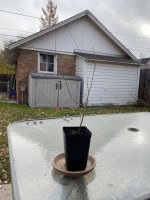
The tree came much earlier than expected, arriving earlier today! Needless to say, I am beyond excited and have been staring at it for the past few hours. It’s much younger and less developed than I thought it would be, but I think that’s a bit of a blessing. This way I’ll be able to nurture it from earlier! The soil felt moist when it arrived so I waited to water it until just a bit ago and it looks like the soil has good drainage, the water flowed through quickly. Aside from that, the seller included a card specifying that the tree was in dormancy so that’s good. (Maybe I can put it outside this first winter after all?) I already have some ideas and plans formulating for the spring! I’ll be posting images tomorrow when I’ve got some sunlight I can picture it in. Can’t wait to see what you all think!
 
The tree came much earlier than expected, arriving earlier today! Needless to say, I am beyond excited and have been staring at it for the past few hours. It’s much younger and less developed than I thought it would be, but I think that’s a bit of a blessing. This way I’ll be able to nurture it from earlier! The soil felt moist when it arrived so I waited to water it until just a bit ago and it looks like the soil has good drainage, the water flowed through quickly. Aside from that, the seller included a card specifying that the tree was in dormancy so that’s good. (Maybe I can put it outside this first winter after all?) I already have some ideas and plans formulating for the spring! I’ll be posting images tomorrow when I’ve got some sunlight I can picture it in. Can’t wait to see what you all think!
Don’t formulate design plans.

Your first lesson is to learn how to care for the tree. That takes time. First time owners tend to overcare for their trees or attack them with needless possibly detrimental design assaults before they learn what the tree requires physically. You can’t design a dead tree. Don’t fall into the trap of having to “do something” to the tree just to “do something”. Everything we do in bonsai care or design must have a reason and a season to do it.

You first year should be learning how to water correctly with the tree you have. Watering is not easy as needs vary season to season and even day to day. The soil in the pot is also a huge variable.

I would also take the dormancy note with some skepticism. If the tree has green leaves or any sign of new growth, it is not dormant. This can depend on where you bought the tree. Some vendors are better than others.
 
Welcome. I think rockm has given you good advice, it's not easy keeping a tree inside as there are light and insect issues as well as dry air with heating a house. But I think given your location you'll be better off inside this year. Please put your zone into your profile, Colorado is full of differing climates as you know, so would be good to have that so you can get the best advice here. Best of luck with your new tree!
 
First time owners tend to overcare for their trees or attack them with needless possibly detrimental design assaults before they learn what the tree requires physically. You can’t design a dead tree. Don’t fall into the trap of having to “do something” to the tree just to “do something”. Everything we do in bonsai care or design must have a reason and a season to do it.
I'm beyond my first ownerships by almost a decade but I still love doing work too soon for the sake of doing something. I believe 'I want to' is a good reason to do things.
Over time, I get better at knowing what I can do and how far I can take it.
In my opinion, that is also part of the learning and the adventure. I know myself well enough to know I'd quit the hobby if I would have to sit on my hands and wait for the right time.
Less great for the plants, better for me as an interactive learner.
To quote a Shrek line:
"Some of you will die, but that's a sacrifice I'm willing to make".
 
Thank you all for the input! Don’t worry, I’m definitely not seeking to kill my tree from over-attention. I think I’m simply letting my mind wander with the possibilities. I’m sure down the road when it’s time to actually work on it, plans will change. Regardless, I want to say how appreciative I am of all the responses to my posts here! I feel cautiously confident now that I’ve got a lot of good minds assisting me.

As for watering, I wanted to clarify for my own sake what signs to look for when deciding to water. So far I’ve simply been touching the soil to get a feel for how quickly it seems to dry but I don’t yet have the knowledge to determine what’s too wet and what’s dry enough. Any wisdom would be appreciated!

Below are a few pictures of the tree, I think it’s just the cutest!
IMG_5490.jpeg
IMG_5491.jpeg
IMG_5492.jpeg
 
As for watering, I wanted to clarify for my own sake what signs to look for when deciding to water. So far I’ve simply been touching the soil to get a feel for how quickly it seems to dry but I don’t yet have the knowledge to determine what’s too wet and what’s dry enough. Any wisdom would be appreciated!
I'm a bonsai greenhorn myself, but I've learned A LOT from this forum, and I'm trying to temper my advice by limiting it to what I've practiced myself, rather than simply parroting the wisdom and experience of the veterans here. Chopsticks. Not on the piano, but wooden or bamboo chopsticks or skewers. Stick one all the way into the soil and leave it there. It's very rudimentary, but just as effective. You can check it every day and place it right back into the same place you pulled it from. You don't want it to be wet, but you don't want it to be bone dry. When it comes out of the soil, if it is still slightly damp, it is time to water, and water thoroughly, so that it flows from the bottom of the pot. Allow it to drain, and then wait for it to be nearly dry again. It won't need regular watering, it will need watering when it's thirsty. In especially hot and/or dry weather, of course, you'll water more often, whereas in cool or rainy weather, you may not water for a week in extended wet weather.
Welcome to the NutHouse, and the art of patience!
 
I'm a bonsai greenhorn myself, but I've learned A LOT from this forum, and I'm trying to temper my advice by limiting it to what I've practiced myself, rather than simply parroting the wisdom and experience of the veterans here. Chopsticks. Not on the piano, but wooden or bamboo chopsticks or skewers. Stick one all the way into the soil and leave it there. It's very rudimentary, but just as effective. You can check it every day and place it right back into the same place you pulled it from. You don't want it to be wet, but you don't want it to be bone dry. When it comes out of the soil, if it is still slightly damp, it is time to water, and water thoroughly, so that it flows from the bottom of the pot. Allow it to drain, and then wait for it to be nearly dry again. It won't need regular watering, it will need watering when it's thirsty. In especially hot and/or dry weather, of course, you'll water more often, whereas in cool or rainy weather, you may not water for a week in extended wet weather.
Welcome to the NutHouse, and the art of patience!
This sounds like a fantastic idea! I’ll have to see if I have any chopsticks or wooden dowels lying around. Art of patience for sure! But then again, thats exactly what I’m trying to nurture in myself!
 
I found the most useful way for me to learn watering was by weight. Water a pot until soil is saturated (dripping out of drain holes for a while). Pick up one side of the pot. The weight is how heavy a well watered pot feels. Ove the next day or so when I wonder about watering I pick up the side of the pot. As water is used or evaporates the pot gets physically lighter. I wait until it two thirds light or so than it was.

Also helps to observe the color of the soil on the surface of the pot. Wet and damp soil is darker than drier soil.

I water by how the soil looks now along with consideration for season and weather. Windy warm days in late spring for instance make watering two or even three or more times in a day. A cool damp day in November when trees are dropping leaves won’t require any water mostly
 
I found the most useful way for me to learn watering was by weight. Water a pot until soil is saturated (dripping out of drain holes for a while). Pick up one side of the pot. The weight is how heavy a well watered pot feels. Ove the next day or so when I wonder about watering I pick up the side of the pot. As water is used or evaporates the pot gets physically lighter. I wait until it two thirds light or so than it was.

Also helps to observe the color of the soil on the surface of the pot. Wet and damp soil is darker than drier soil.

I water by how the soil looks now along with consideration for season and weather. Windy warm days in late spring for instance make watering two or even three or more times in a day. A cool damp day in November when trees are dropping leaves won’t require any water mostly
Oh that's a lovely technique, I'll give that a try as well! I'll be sure to keep an eye on how its needs change as the seasons go by.
 
Back
Top Bottom