Native to the Northern Chihuahua Desert

I'm not sure how well this would work further south, but some advice I got from a guy in the Rocky Mountain bonsai group for soil was: 1/1/1/1/1 akadama, pumice, lava rock, compost, and coconut coir. Our natives (mountain mahogany, fernbush, great western sage, pinyon, chokecherry) seem to like it so far. Holds just enough moisture when we get super dry, but not enough organic material that it's ever sopping wet.

I'm growing some Euphorbia californica (cliff spurge, native to Baja California area) in a similar mix, just without the coir. Doing very well so far, but it's been kept indoors (humidity 30-45%), so make of that what you will.
 
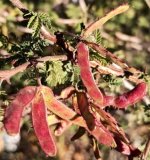
This tree is really out to get ya. The thorns are tiny, but sharp and strong. Even the seed pods, tiny as they are (up to 4 cm), have spines on the outward edge.
Screenshot_20260105_135439_Google.jpgScreenshot_20260105_135521_Google.jpgScreenshot_20260105_135621_Google.jpg
Here is a thicket which includes what appears to be a Hinckley Oak.
Screenshot_20260105_140010_Google.jpg
Screenshot_20260105_185940_Google.jpg
Screenshot_20260105_190032_Google.jpg
 
Last edited:
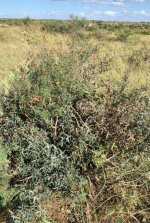
These trees are sometimes considered invasive, and are often treated as weeds, as they are so resilient, because they can grow in almost any condition. They are the first plants to repopulate or recover from over grazing and fire, so they often outcompete native grasses and other desert fauna. They can be especially undesirable for ranchers and hunters or outdoorsmen who wish to have a more diverse ecology in their environments after destruction of rangelands and forest meadows. They range from western and central Texas, across southern areas of New Mexico and Arizona, and south into northern Mexico. It has been expanding its range, and seems to benefit from the nursing of the redberry juniper, which provides the shade and ideal humidity for germination. Seeds are spread when the pods burst open once they reach a certain dryness. They are also forage for cattle, so seed can be spread through manure, which holds moisture in the soil and nutrients for the seedlings.
 
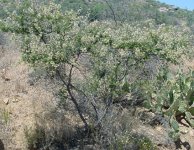
Like many desert trees and shrubs, these trunks usually have a natural flowing or even dramatic, perhaps grotesque movement. Branches follow the same pattern, often twisted and gnarled, usually bending at the internodes or thorns. The thin bark starts as a smooth medium gray, darkening to a rough charcoal with subtle vertical fissures as it ages.
Screenshot_20260105_195826_Google.jpg
I sprouted a few of these last spring. I will update any new information as mine develop and I learn more about them.
 
Back
Top Bottom