What are you trying/doing that’s new, uncommon, or unusual?

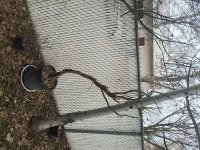
With Fourwing, do your big rootwork late winter early fall. It will have a long taproot but cut most of mine back. I saw it in the back lot of a nursery in Tucson and I don't think they had even been watering it... I am growing it in a strainer to try to encourage finer roots. I'll know more when I repot if it worked. This one is super skinny but has a cool vein of deadwood running up the middle. I grew up with them in my home town in Colorado but I have other reasons why it's special. It's an emotional story for one day. I will need a creative potter at some point. Maybe you all will have some thoughts. As to Creosote, yes they absolutely have potential. The oldest living things on earth are fascinating plants. Give n their natural way of life (they clone themselves so the ones you see out in the desert are literally clones of one that could be as much as 10k years old. I said all that to say that You might have super good luck layering. That said if you have to dig, do it during the rainy season. Would you believe there is one in the park across the street from my house with about a 6" trunk?

I am very interested in saltbrush as well, and any other western native, cold-hardy guys. Please post some photos as it progresses. Looks like zone 4-5, so it would probably do fine in Denver? I think I've seen it at Nick's in the native section.
 
I'm experimenting with using large amounts of charcoal in my substrate. I'm one of the knuckle-draggers still using turface and organics. The charcoal should hold some water and air without breaking down like most other organics.
You should read up on the dangers of using large amounts of charcoal in the aquarium hobby... Im not an expert but there has been lots of cases where more is not better. The charcoal tends to absorb the bad stuff and then will release it back and kill everything in the tank... Not sure how that translates to bonsai but I know I will not be doing it!
 
No one else seems to be working with silver buffalo berry (Sheperdia argentea). A stout and thorny prairie native with sour red berries and silvery blue green foliage. I only have one but will be digging more in spring.
Same plant different seasons
Great looking tree! Don't forget - buffaloberry is dioecious, so only the females fruit. Make sure you have a few males with your females if you want those red berries!
 
Total newby to bonsai. I have several small boxwoods started. They're growing free in my yard, why not? I'm reading, learning as I go and watching the individual trees for issues. This one, I'm experimenting with. I read that boxwoods are susceptible to bugs, fungus and other assorted nasties. I'm not fond of chemicals. So I'm trying cinnamon steeped in rain water to see if it has an adverse affect on the foliage. I think I first potted this little guy in June, moved it indoors mid November. It still appears healthy and is putting out substantial new growth.

 
I’ve been growing this ficus in a tray with no drainage for a few years; and I’m not going to repot it, ever. To water, I completely submerge it in a bucket. It lives in a grow tent: high light, heat, and humidity..IMG_6444.jpeg
 
Let’s hear about those fresh/weird/controversial/good bonsai ideas and side projects.
I have a tanuki that failed last year (an Atlas Cedar) I'm planning on taking the massive piece of deadwood coating it it resin and doing another with a red bud as the primary tree... However I'm also thinking about planting some climbing woody vines with it to give the tree a bit of a story and slowly grow out the redwood as a cascade and having the vines grow over the top and cleaning it to a standard upright or possibly a literati... I keep second guessing my future projects just because I've had Soo... So many failures these last two years.

What do you guys think? (Photo of the failed tanuki for reference) It's about 6"7 in the pot so the wood is probably 4-5 feet tall
 

Attachments

  • 1766182504053499161632637475112.jpg
    1766182504053499161632637475112.jpg
    440.8 KB · Views: 15
@rusticana
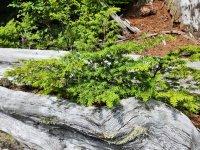
Hemlock and Douglas-fir “logs” should work well, particularly if they had already started to rot. Hemlock, spruce, alder, cottonwood, silver fir, and maple rots fast, Douglas-fir has a medium rate of decay. Red cedar takes forever to rot and only becomes effective nurse logs once cracks and crevices open up and collect enough broken-down organic debris for seedling to root in.

I have similar projects going. All the hemlocks with stapled-down roots didn’t survive, but it could’ve been something other than the staples that did them in.
Thick moss works well for insulating the spreading roots.
I would wait longer than a year to expose roots, especially if the starting nurse wood was not decadent. Roots need time to work their way into the rotting wood and become established in substrate below.
One of my compositions is a red cedar over maple stump in its 4th year, still mostly covered. Roots in the pot beneath the stump were trimmed in 2024 to encourage more stump-root growth. Surface roots will start to be exposed in 2026. Exposure will happen incrementally in following years, not all at once.

It might interest you to know that rows of mature trees that established on nurse logs are known as Colonnades.
That is information for me. The ones in the gravel clay in the open 2 died next year. I suppose once you break ground there susceptible to dry out and even at almost 40000 ft it can be a real scorcher. There's even some gunera on the property
Under snow now.i have a suitable trough. But next year I might just use a sharp shovel to prune the roots and lift it a bit then start brushing off some soil
Its about 1" deep at the moment.
Lots of rain up there but also a super dry period. This is a picture of a whole forest on top of a fallen log. Probably quite ancient.
 

Attachments

  • 20250719_152657.jpg
    20250719_152657.jpg
    711.1 KB · Views: 10
Back
Top Bottom