what are these black spots on my JBP?

bdmatt

Mame
Messages
177
Reaction score
1,404
Location
Riverside, California
USDA Zone
10a
Hello yall,

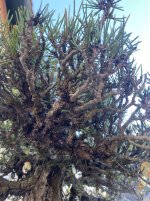
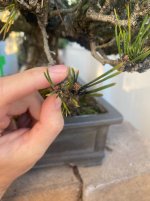
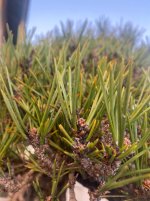
Recently picked up this older black pine for a pretty good price. I don't know much history about the tree besides it being around 50 years old and of the corking variety. Near the base of the needles, there is this black spots / soot. I'm thinking it's fungal and would like to treat with daconil. but want to confirm first with the more experienced pine growers. Anyone know what this is and how I should treat it?
 

Attachments

  • IMG_3191.JPG
    IMG_3191.JPG
    140.2 KB · Views: 78
  • IMG_3192.JPG
    IMG_3192.JPG
    184.9 KB · Views: 86
Hello yall,

Recently picked up this older black pine for a pretty good price. I don't know much history about the tree besides it being around 50 years old and of the corking variety. Near the base of the needles, there is this black spots / soot. I'm thinking it's fungal and would like to treat with daconil. but want to confirm first with the more experienced pine growers. Anyone know what this is and how I should treat it?
Rather than try to diagnose the tree from the above photos, I would suggest checking under the hood. How is the drainage? What does the rootball look like at this point. Simply remove from the pot and check it out.
Unless you have clear information from the previous owner when it was repotted and what it has been treated for recently!
Taking steps to improve the care and condition of the tree is a good first step. With pines I find the most important first step is to get a clear handle on the root health. And this is a good time of year to do that in your neck of the woods.

The pictures are not very clear but seem to indicate some possible issues! A picture of the overall tree clearly focussed might give a better understanding of the general health. It would also display the type of care and maintenance the tree has received in the recent past. Important pieces of information before narrowing in and deciding to use a specific treatment.
 
Drainage is really good, water went right through. From looking at the surface, soil looks to be 50:50 lava rock and akadama. Haven't taken it out of it's pot, but will do to check roots. I asked the seller on when the tree was repotted, she responded saying "its been a long time, can repot now" She doesn't know specifics because it was her (late?) uncles tree.

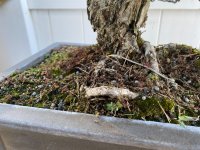
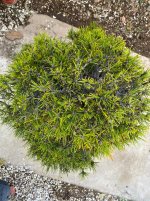
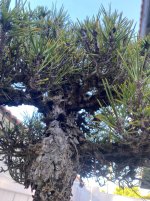
Tree is well ramified. The color seems off to me but I chopped it off to winter. Images attached of the nebari, top down, and ramification.
 

Attachments

  • IMG_3196.JPG
    IMG_3196.JPG
    426.3 KB · Views: 71
  • IMG_3195.JPG
    IMG_3195.JPG
    437.9 KB · Views: 55
  • IMG_3194.JPG
    IMG_3194.JPG
    338.3 KB · Views: 54
  • IMG_3193.JPG
    IMG_3193.JPG
    323.5 KB · Views: 77
I have sooty mold on some pines from aphid poop. Looks 100% similar.

The high sugar whatsitcalledagain honeydew(?) is a great breeding ground for black mold. It should rain off in a couple showers.
It doesn't hurt the plant but it does block sunlight. I've wiped it off with soapy water on a cloth and gave the plant a good rinse afterwards.

Check and treat for aphids if you can, there are probably a couple that have made your plant their home. In winter they're dormant, but in spring they might become a problem; best to have your sprayer ready.
 
Can't see anything much from those photos.
Black spots on pines could be scale or sooty mould which is secondary and caused by aphids or other sucking insects. Have a really good look for signs of scales on the needles and/or aphids. Use insecticide to deal with the insect pest. That will also stave the sooty mould but the black marks stay for quite a long time even after the fungus is dead. I've had some success getting the worst off with soapy water but, short of rubbing each and every needle, there's always some left that will stay for a year or so.
 
Look for aphids or other sucking pests (mealybugs, whiteflies, leafhoppers). You guys in Riverside have been getting a lot of warm and wet weather. It is important to note that the root cause of this sooty mold may have been created last year, and is only now growing because it has just now been getting rain. Honeydew can sit on tree leaves somewhat indefinitely if it isn't washed off.

The important thing is that the mold is on the outside of the needles, and the underlying needles look healthy. The mold is often hard to remove, but an organic soap and water mixture with Q-tips or cotton balls may help take it off. Note that even if the mold isn't directly damaging, it is blocking sun from reaching the needles, which may ultimately cause needle loss.

[EDIT] Looking more closely at your photos, I see webbing under some of the branches. Check for spider mites. Spider mites can definitely cause sooty mold on pines, particularly on corky cultivars where they are hard to eliminate because they can hide in all the cracks and crevices. Bottom line I believe you have an insect pest problem, and the sooty mold is a symptom, not a cause. [/EDIT]

webbing.jpg
 
Last edited:
Back
Top Bottom