Can you give me a precise, accurate definition for the term literati bonsai?

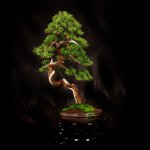
I thought I had a handle on what a literati was until I saw the winner of the US National show. Which is a stunning tree, but, literati? Doesn’t seem to meet the definitions being discussed here at all.
 
So literati is like fight club? The first rule of literati is don’t talk about literati?
Consider what I said from a philosophical angle. @rockm stated "WHERE" we get the idea and the terms. If you have ever been around truly brilliant academic folk (and I have had the privilege), they are far too busy in thinking about their field of study to consider or care about what it looks like to others. In fact they hardly know a world outside of their field of study exists. So looking at what @Michael P said and didn't say... it is the perfect definition based on WHERE we get the term initially. You see bonsai, is equal parts, art, science, discipline, and philosophy. Handbooks of definitions are not found at higher levels of academic thought.
 
You can’t define the style by citing itself, but in the 2 dementia form. A lot of people
here are making a point about the literati style
of painting but missing the understanding of why it’s important. Literati is a feeling, much more than a defined style, although it certainly
has stylistic features. The paintings come from a subset of individuals that lived the “literati life-style”. John Romano, an artist here in the northeast has a wonderful presentation on the history and style of literati trees, or bunjin-gi
 
Last edited:
I thought I had a handle on what a literati was until I saw the winner of the US National show. Which is a stunning tree, but, literati? Doesn’t seem to meet the definitions being discussed here at all.
It’s literati “inspired”….if
Not literati, how would you classify this tree you mention?
 
How would you cla
This tree?

View attachment 624300

It doesn't even fit my liberal definition. Definitely not literati.
how would you classify it then? By no means is it the classic bunjin-gi, but it certainly breaks the rules of any other typical “style” we might try to conform this tree too. If not simply literati-style, why not literati influenced?
 
For me the main thing a bunjin/literati needs is a long mostly taper-less trunk with quirky unpredictable movement and a lack of low branching. Most of the time that is accentuated by sparse foliage, but I don’t consider that to be a requirement. I do think a narrow foliage silhouette is mandatory though, just from a design perspective. I would consider that tree from nationals to be a literati, but I also consider these types of arbitrary labels mostly meaningless.

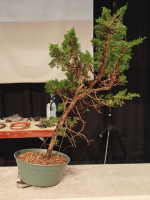
Personally I am partial to those types of think trunks with a little more foliage.

B3609125-2D4C-41BE-AF40-D9EB0B0AF03E.jpeg
 
How would you cla

how would you classify it then? By no means is it the classic bunjin-gi, but it certainly breaks the rules of any other typical “style” we might try to conform this tree too. If not simply literati-style, why not literati influenced?

I would just call it informal upright.
 
For me the main thing a bunjin/literati needs is a long mostly taper-less trunk with quirky unpredictable movement and a lack of low branching. Most of the time that is accentuated by sparse foliage, but I don’t consider that to be a requirement. I do think a narrow foliage silhouette is mandatory though, just from a design perspective. I would consider that tree from nationals to be a literati, but I also consider these types of arbitrary labels mostly meaningless.

Personally I am partial to those types of think trunks with a little more foliage.

View attachment 624301

Don't misunderstand me. Of all the trees to win an award at that show, the not-really-a-literati tree is my favorite. Notwithstanding, in the absence of a photo, if I had to describe it to you, I would call that tree a slender informal upright. It would not occur to me to call it a literati tree. That's my litmus test, anyway. It does not bear a family resemblance to other literati trees.
 
For me the main thing a bunjin/literati needs is a long mostly taper-less trunk with quirky unpredictable movement and a lack of low branching. Most of the time that is accentuated by sparse foliage, but I don’t consider that to be a requirement. I do think a narrow foliage silhouette is mandatory though, just from a design perspective. I would consider that tree from nationals to be a literati, but I also consider these types of arbitrary labels mostly meaningless.

Personally I am partial to those types of think trunks with a little more foliage.

View attachment 624301
I feel like the idea of narrow foliage silloette Sill
I would just call it informal upright.
for me, I think that it’s balance of foliage and sparseness of foliage makes it difficult for me to call informal upright.
 
I just love an answer that explains how one answer is absolutely wrong without lending any understanding to a correct answer 🤔

Pretty lazy content for so many words.
I am not the authority. I point to those who are (Ryan and Michael). The demo trees Ryan made were excellent examples to use for this thread. I can see what is NOT Literati/Bunjin but my definition would be lacking to say otherwise. Working my own Literati I do it by removing what makes my tree non Literati. Perhaps working backwards to reach the goal. I see this thread as a circular argument to re defile or dilute the true definition to American standards. Be happy😌.
 
Last edited:
Back
Top Bottom