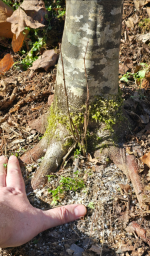
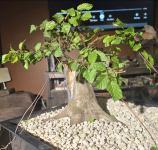
I too have a limitless supply of
C. caroliniana on our private land. I have collected several and am planning to collect a couple this Spring.
But honestly, I have some qualms with them, namely the following:
- They don't heal over trunk chops very well at all. In larger specimens that I have seen in professional bonsai gardens around the US, the trunk chops are typically carved. Small tress (less than 2") seem to be able to heal OK. In the oldest specimens that I have seen, the heartwood is often missing entirely after rotting away. This can create a pretty cool effect, in my opinion, but it certainly would not be appealing to the eyes of someone who prefers the traditional Japanese style deciduous.
- The bark and cambium layer is incredibly thin. It's like paper. If you accidentally poke it with anything remotely sharp, chances are that you went all the way through. Just scratching the bark seems to remove the whole cambium.
- New shoots are super brittle.
- They are fairly prone to fungus although it is very easy to manage compared to other species so not really an issue.
My favorite, although not technically
Carpinus, is
Ostrya virginiana. It is very closely related to
Carpinus. I have not had any of the afforementioned issue with it. The only negatives compared to
C. caroliniana that I have experienced are that it grows a little bit slower and the branches are stiffer, making them difficult to wire after they have hardened.
I have not tried Korean hornbeam, but from what I have been told, they are a very good species to work with.