
milehigh_7
Mister 500,000
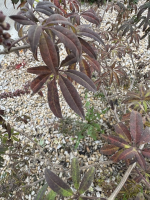
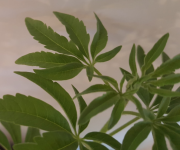
Let's make a catch-all thread for this genus. Likely best we start with a simple dichotomous key. I say this because looking at the data I have had V. negundo unknowingly. I have successfully grown: V. negundo, V. agnus-castus, and V. trifolia.
Botanical Key: Common Vitex Species in Bonsai
For use with mature, vegetative growth (flowers/fruit not required)
1a. Leaves are SIMPLE (single blade attached to the petiole). [Go to 2] 1b. Leaves are COMPOUND (3 to 7 leaflets radiating from a central point). [Go to 4]
2a. Growth habit is prostrate, creeping, or sprawling (vine-like). Leaves are round to obovate, matte finish, with silvery/white undersides.
Species: Vitex rotundifolia (Beach Vitex) Native Region: Pacific Rim shorelines (Japan, China, Hawaii, Australia). Bonsai Note: Excellent for cascade or literati styles; very salt tolerant.
2b. Growth habit is upright (shrub or tree). Leaves are not round. [Go to 3]
3a. Leaves are large (5–10cm+), glossy, deep green, and leathery. Tree is evergreen.
Species: Vitex lucens (Puriri) Native Region: New Zealand. Bonsai Note: Rare outside NZ; produces pink/red flowers and large red berries.
3b. Leaves are smaller, oval-elliptic. Undersides are often purple or gray-green.
Species: Vitex trifolia var. simplicifolia (Simple-leaf Chaste Tree) Native Region: SE Asia, Pacific, East Africa. Bonsai Note: A variant of V. trifolia popular for smaller Shohin bonsai due to leaf reduction.
4a. Leaflet margins are SERRATE (toothed/saw-edged). Leaves typically have 3–5 leaflets.
Species: Vitex negundo (Chinese Chaste Tree / Five-leaved Chaste Tree) Native Region: East & South Asia, Philippines, East Africa. Bonsai Note: Very common in bonsai but often mislabeled as agnus-castus. Roots easily; very hardy.
4b. Leaflet margins are ENTIRE (smooth) or slightly wavy (rarely with a few stray teeth). [Go to 5]
5a. Leaves predominantly have 3 leaflets (trifoliate). Underside of leaf is densely hairy (tomentose), appearing bright white or silvery.
Species: Vitex trifolia (Three-leaved Chaste Tree) Native Region: SE Asia, Pacific, Australia. Bonsai Note: Not as cold hardy as agnus-castus. The contrast between the green top and white bottom of the leaf is a key aesthetic feature.
5b. Leaves predominantly have 5–7 leaflets. Underside is gray-green or lighter green, but not stark white/silvery. [Go to 6]
6a. Leaflets are narrow/lanceolate. Foliage is aromatic (spicy/herbal scent) when crushed. Inflorescence (if present) is a long terminal spike.
Species: Vitex agnus-castus (Chaste Tree / Monk’s Pepper) Native Region: Mediterranean Basin, Central Asia. Bonsai Note: The standard species. Bark usually fissures vertically with age (or corks early in cultivars like 'corteza áspera' my little contribution to the world.).
6b. Leaflets are elliptic/ovate and glabrous (smooth/shiny/hairless). Wood is exceptionally hard/dense.
Species: Vitex parviflora (Molave) Native Region: Philippines, Indonesia. Bonsai Note: Prized in tropical bonsai for its deadwood (jin/shari) which is durable like Juniper.

Botanical Key: Common Vitex Species in Bonsai
For use with mature, vegetative growth (flowers/fruit not required)
1a. Leaves are SIMPLE (single blade attached to the petiole). [Go to 2] 1b. Leaves are COMPOUND (3 to 7 leaflets radiating from a central point). [Go to 4]
2a. Growth habit is prostrate, creeping, or sprawling (vine-like). Leaves are round to obovate, matte finish, with silvery/white undersides.
Species: Vitex rotundifolia (Beach Vitex) Native Region: Pacific Rim shorelines (Japan, China, Hawaii, Australia). Bonsai Note: Excellent for cascade or literati styles; very salt tolerant.
2b. Growth habit is upright (shrub or tree). Leaves are not round. [Go to 3]
3a. Leaves are large (5–10cm+), glossy, deep green, and leathery. Tree is evergreen.
Species: Vitex lucens (Puriri) Native Region: New Zealand. Bonsai Note: Rare outside NZ; produces pink/red flowers and large red berries.
3b. Leaves are smaller, oval-elliptic. Undersides are often purple or gray-green.
Species: Vitex trifolia var. simplicifolia (Simple-leaf Chaste Tree) Native Region: SE Asia, Pacific, East Africa. Bonsai Note: A variant of V. trifolia popular for smaller Shohin bonsai due to leaf reduction.
4a. Leaflet margins are SERRATE (toothed/saw-edged). Leaves typically have 3–5 leaflets.
Species: Vitex negundo (Chinese Chaste Tree / Five-leaved Chaste Tree) Native Region: East & South Asia, Philippines, East Africa. Bonsai Note: Very common in bonsai but often mislabeled as agnus-castus. Roots easily; very hardy.
4b. Leaflet margins are ENTIRE (smooth) or slightly wavy (rarely with a few stray teeth). [Go to 5]
5a. Leaves predominantly have 3 leaflets (trifoliate). Underside of leaf is densely hairy (tomentose), appearing bright white or silvery.
Species: Vitex trifolia (Three-leaved Chaste Tree) Native Region: SE Asia, Pacific, Australia. Bonsai Note: Not as cold hardy as agnus-castus. The contrast between the green top and white bottom of the leaf is a key aesthetic feature.
5b. Leaves predominantly have 5–7 leaflets. Underside is gray-green or lighter green, but not stark white/silvery. [Go to 6]
6a. Leaflets are narrow/lanceolate. Foliage is aromatic (spicy/herbal scent) when crushed. Inflorescence (if present) is a long terminal spike.
Species: Vitex agnus-castus (Chaste Tree / Monk’s Pepper) Native Region: Mediterranean Basin, Central Asia. Bonsai Note: The standard species. Bark usually fissures vertically with age (or corks early in cultivars like 'corteza áspera' my little contribution to the world.).
6b. Leaflets are elliptic/ovate and glabrous (smooth/shiny/hairless). Wood is exceptionally hard/dense.
Species: Vitex parviflora (Molave) Native Region: Philippines, Indonesia. Bonsai Note: Prized in tropical bonsai for its deadwood (jin/shari) which is durable like Juniper.