Sapling Division: Kanorin's Pinus echinata (shortleaf pine) forests (x2)

Kanorin

Omono
Messages
1,183
Reaction score
2,525
Location
St. Louis, MO
USDA Zone
6a
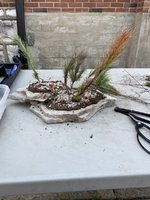
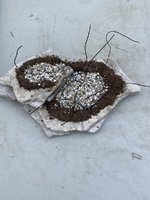
For the first forest, I took epoxy and glued these two flat rocks together. Epoxy was also used to anchor the tie-down wires. Then I made a muck wall. The idea is to elevate the left side slightly so it looks like a cliff overlook.
IMG-4852.jpg
IMG-4853.jpg


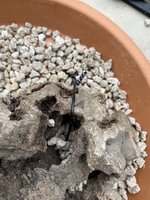
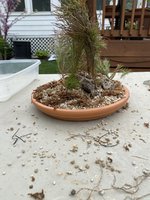
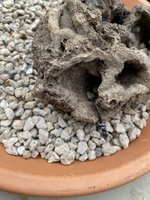
For the second forest, I used this cool geode-type rock that had three holes in it. That was put on a terra cotta saucer that I had drilled drainage holes in (yay for a $7 forest pot). I mainly just secured the rock to the saucer with wires, then placed the trees and filled them in without tying them down because they are so tiny and don't really have any substantial roots to tie to.
IMG-4891.jpgIMG-4892.jpg
IMG-4893.jpg
 
These are both super dead. In fact, all 25 of my pinus echinata seedlings died this year - even some that I put into the ground. They looked pretty poor when I received them and I'm not sure anything was going to bring them back. (although I bet cutting off some roots didn't help).
 
These are both super dead. In fact, all 25 of my pinus echinata seedlings died this year - even some that I put into the ground. They looked pretty poor when I received them and I'm not sure anything was going to bring them back. (although I bet cutting off some roots didn't help).

Sorry to hear that :(

I think I ordered the same 25 pack of yearlings you did. I paid a half dozen or so forward to another member of the forum from St. Louis. Last I heard 2 of those were still alive. Of the rest, I didn't try to keep them all, but, of the ones I did try to keep, many died :(

But, I still have 4 left! They are in a community grow bag and in the native tree challenge. I need to dig them out and update that thread at some point...

One thing I think helped is I unpacked them and put them in a pail of water for a day or two before I planted them. I think that can really help these reforestation bundles that get bare rooted stuck in a warehouse shipped out in the mail in the dead of winter when they are "dormant". They get thirsty ;)
 
Sorry to hear that :(

I think I ordered the same 25 pack of yearlings you did. I paid a half dozen or so forward to another member of the forum from St. Louis. Last I heard 2 of those were still alive. Of the rest, I didn't try to keep them all, but, of the ones I did try to keep, many died :(

But, I still have 4 left! They are in a community grow bag and in the native tree challenge. I need to dig them out and update that thread at some point...

One thing I think helped is I unpacked them and put them in a pail of water for a day or two before I planted them. I think that can really help these reforestation bundles that get bare rooted stuck in a warehouse shipped out in the mail in the dead of winter when they are "dormant". They get thirsty ;)
Thanks for this tip! I’ll try that out next spring.
I also know that last year I opted to receive mine in the 2nd week of April and I think that was a mistake…not sure if they were extra weak because they had started to wake up prior to shipping or perhaps had been dug up a few weeks earlier and stored cold to prevent them from budding. Neither of those are great situations. A club member who received theirs a few weeks earlier had better survival rates. I’ll try that next spring.
 
Trying again this year! I'm liking how they look in that @penumbra pot.
IMG-6783.jpg
Tying in 1-2 year old bareroot seedlings is tough because there are no substantial roots to tie down to, so I tried this trick that a clubmate shared with me. Basically you wire the basal root flare all the way up the trunk and leave ~5 inches extra on the root side. Do the same thing with a second seedling. Take those extra 5 inch pieces down through some tieholes and twist them together, anchoring them to each other. Here's what the bottom looks like
IMG-6786.jpg
 
Any updates on this? I’m trying to learn about this species.
 
Any updates on this? I’m trying to learn about this species.
I get these shipped as bare-root 1 year old seedlings from the Missouri department of conservation. In my first few years with them, I would trim their roots slightly to help them fit in a pot better and most of those would die. I think 4 out of 5 of the trees in this planting died, so I separated the group.

Last year I got a few and didn't touch their roots at all, planting them in deeper training pots until they get established. Much better success that way, but it's a slow game of gradually reducing the container volume every few years.

At the moment, the only forest I have of Pinus echinata are in a Missouri native mixed forest, which also has red maples and downy serviceberries. I'm not sure if I have a thread for that one - I'll check.
 
That’s a great way to source raw material. I wonder if Virginia does something similar with our native trees…

Any photos of what you’ve been working on and that local forest? I have seeds I collected from a nearby SLP. They’re common enough here but are usually too tall for cone collecting. I’m lucky enough to have a park nearby where I can still reach the lowest branches.

I was planning to treat them like JBP seedling cuttings. I’ve heard they don’t respond so reliably (perhaps for the reasons you’ve shared regarding their dislike of having their roots pruned when very young), but I think I’ll still give it a try while leaving a couple of them grow naturally (for insurance).

Supposedly, the seedling cutting method is the only way to remove the basal crook. I know the basal crook is considered a potential bonsai asset for developing pines, but I don’t need (or want) back budding low on literati trees, which is my intent.

I have SLP, JRP, and JBP seeds in stratification now and look forward to seeing the nuances in how they respond to pruning techniques. I also have JWP seeds, but these will obviously be treated quite differently.
 
Back
Top Bottom